- - - - - - - - - - - - - - - - - - - - - - - - - - - - - - - - - - - - - - - - - - - - - - - - - - - - - - - - - - - - - - - - - - - - - - - - - - - - - - - - - - - - - - - - - - - - - - - - - - - - Stephen Lyn Bales, editor

Tuesday, July 26, 2011

Here today; flown tomorrow

Carolina wren (Thryothorus ludovicianus) nestlings


Oh, they do grow up fast!

Ijams education director Jennifer Roder was surprised to find this Carolina wren nest outside her office window at the nature center and had a perfect vantage point to watch the entire nesting process.

Surprised because it's so late in the season, so late in the season in fact, educator Emily Boves speculates that it was the third clutch for this pair of wrens. Raising one brood must be exhausting, but three?

Jen took the above photo on Saturday, July 23 and as she points out, the four nestlings are starting to get their "Big Boy" wing feathers.

Sure enough. Poof. Today they are gone. Fledged. Hasta la vista, baby. Off to wren college.

And their parents? Well, actually they are not quite finished. After they teach their new young ones how to be wrens—what to eat, where to find food, where to roost, what to be afraid of, how to communicate, etc. etc.—then they will take some time off. Or at least, that's what we think.


- Story by Stephen Lyn Bales. Photo by Jennifer Roder.

Saturday, July 23, 2011

First class completes wizards of nature school

  The Ijams' distinguished wizarding faculty. Wizards all!

Oh, the magic of nature! The wiz of it all.  


The first class graduated from the Wizarding World of Ijams, our very own Ha-Ha-Hogwarts.

After being sorted into their four houses—and I'm a hard-working, loyal, badger-loving Hufflepuff man, so don't intrerupt me, I'm on task—the sixty young wizards successfully completed four classes: Herbology, Care of Magical Creatures, Potions and Charms. Each class was taught by one of Ijams gifted wizardry professors.

But it wasn't all hard studies. After the classes each student got to take part in a Bertie Bott's Every Flavor Beans flavor guessing competition with flavors that ranged from strawberry and blueberry to vomit and booger. Yes, booger and don't pretend you don't know what that tastes like.

The feast treats served after the day of higher learning included pumpkin pasties, treacle tarts, sherbet lemon, licorice wands, cauldron cakes and (my own favorite) cockroach clusters. Crunchy. Crunchy. 


- Special thanks to Jennifer's inspiration, plus Peg, Kara, Louise I, Louise II and Sabrina.


- Story by Stephen Lyn Bales. Photo by Karyn Adams. 

Sunday, July 17, 2011

Fields of sunflowers in bloom near Ijams

Sunflower (Helianthus annuus


Oh my gosh!


If you're into the color yellow. Then park your car at Ijams and walk east along the Will Skelton Greenway to Forks of the River Wildlife Management Area.

The 400-plus acre parcel is managed for wildlife by TWRA and they plant field after field after field of sunflowers.

All during the month of July these fields are a sea of vibrant, intoxicating yellow, enough to make painter Vincent van Gogh swoon because the Post-Impressionist artist loved that color, used it intensely. 

Vincent—if I may be so bold as to call him by his first name since we never actually met—painted numerous canvases of sunflowers while living in Provence in southern France in the late 1800s. And all of the sunflowers he painted originated in America. Once sunflower seeds were exported to Europe in the 16th century, the sunny yellow American flowers became very popular.


- Text and photo by Stephen Lyn Bales


Friday, July 15, 2011

Two more weeks of Nature Day Camp left

Camper Isabel James with goggley-eyed
raccoon plant marker craft

Wednesday was Mammal Day, part of Ijams Adventures week, in this summer's Nature Day Camp.

One of the activities to honor mammals was a craft. All of the campers got to plant a tutti-fruiti vinca and make a raccoon plant marker. I ask you, "What could be more precious?"

Camp leader Sabrina DeVault said, "They all were excited to mix the compost and plant the vinca. But what really thrilled them was getting to glue on the googly eyes on the raccoon's face."

There are two more weeks of Nature Day Camp. For schedule, click: Ijams Events.

- Text and photo by Stephen Lyn Bales.

Wednesday, July 13, 2011

Alice Ijams' presence still felt at Homesite

Tiger lily (Lilium lancifolium) and, in the background,
European boxwood (Buxus sempervirens)


Our policy at Ijams Nature Center is to plant native plants and remove non-natives.
Orange Asian daylily
(Hemerocallis fulva)

But there is a location where this is waived. For over 50 years, horticulturist Alice Ijams lived with her family on the Homesite—the western 20-acres of the park—and many of the popular cultivated plants of that era can still be found there.

We leave them alone as a tribute to her influence on our park and the early Knoxville garden club movement.

Around the Homesite, look for Lenten roses, European boxwood, crape myrtle and, at this time of the year, blooming tiger and orange Asian daylilies.

Several of the slow-growing, evergreen boxwoods can be found around the Serendipity Trail and Miller Building.


- Text and photos by Stephen Lyn Bales


Monday, July 11, 2011

Ijams' squirrels are friendly, even presumptuous

Gray squirrel (Sciurus carolinensis) with pilfered apple

Gray squirrels (Sciurus carolinensisare fairly common throughout the Ijams' 275-acre sanctuary. They are one of the few mammals that are diurnal, active during the day. Sometimes even a bit too active. 

Mya, Malachi, Aaron and Rose enjoyed watching
a squirrel help them finish their lunch
Some are quite friendly, even presumptuous. For instance they may think a picnicker has finished eating an apple, even if they have not and scamper down the tree to carry it away and finish off the piece of fruit themselves. 

Recently a group of visitors were having a picnic on the plaza when one of the friendly Ijams' squirrels helped them finish their lunch. And they were delighted to witness the daring heist. 


- Text and photos by Stephen Lyn Bales. 

Saturday, July 9, 2011

Summer heat brings out large crooning frogs


Green frog, Rana clamitans


Oddly, green frogs (Rana clamitans) aren't always green. They can be green to bronze to brown, mixing it up to better blend into their watery environs. They are the second largest species found in our area, humbled in size by only those big, beefy boys: the bullfrogs.

You can find and hear both species in the Plaza Pond in front of the Visitor Center.

The bullfrog (Rana catesbeiana) is a low, rolling thunder "jugggg-oo-rummmm," "jugggg-o-rummmm." While the green frog sounds like the plucking of a rather thick, out-of-tune banjo string, "gunk" "gunk" "gunk." Both also love to croon in the sultry, hot days of summer. 

The frog in the photo is a male. How do I know? Well ask me. 

- Text and photo by Stephen Lyn Bales 


Thursday, July 7, 2011

Bug Night is scheduled Saturday, July 16

Praying mantis


You know it's summer when the praying mantids around the Ijams sanctuary get big enough to easily find.

Hint: at Bug Night—this year scheduled for Saturday evening, July 16—the kid that catches one usually wins the award for "Biggest Bug."

The largest praying mantis in our area is non-native. The Chinese mantis (Tenodera sinensis) was introduced in 1895 to control garden pests, which it does quite well. In many parts of the world, they are often kept as pets in large terrariums. 


- Story and photo by Stephen Lyn Bales. For more information call 865-577-4717, ext. 119. 


Tuesday, July 5, 2011

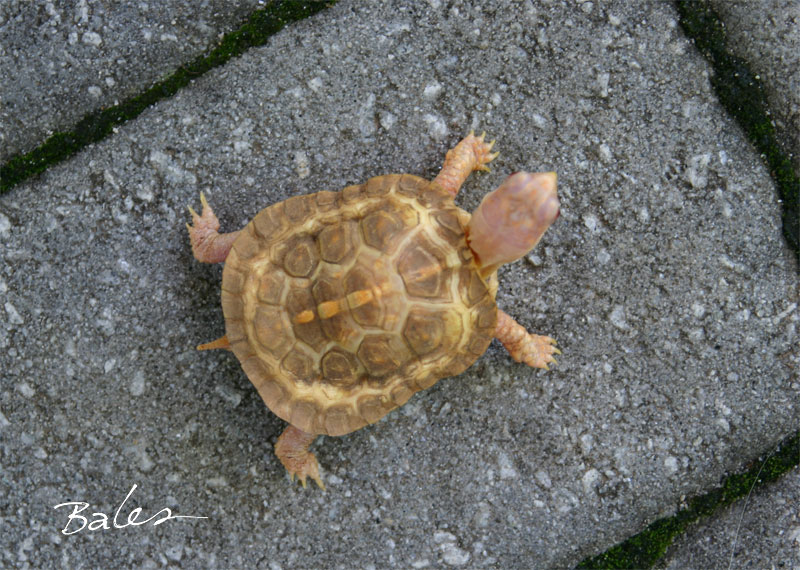
Ijams albino box turtle celebrates second year

Albino eastern box turtle (Terrapene carolina carolina)


The albino eastern box turtle that lives in the Exhibit Hall is celebrating its second anniversary at Ijams.

The tiny turtle was found by Aaron Bullock, at the time he was four-years-old. He named it "Space Rocket." The Bullocks called TWRA and because it was going to need so much special attention to survive, they decided the best course of action was to donate the rare reptile to Ijams. 

"It's was as small as a quarter when we received it," says Dr. Louise Conrad the Ijams' veterinarian. 

The petite albino turtle was initially so small and weak, Louise had to hand-feed it for months and, in time, teach it how to find food on its own.

Two years later, it weighs 40 grams or 1.4 ounces, the equivalent of 6.5 US Washington quarters. It's also very active. 

In the wild, an albino turtle could hardly survive. A predator like a raccoon or coyote could spot it readily. Plus its eyes are so sensitive, direct sunlight could blind it.

Congratulations Dr. Louise! Your patient thrives. 


- Story and photo by Stephen Lyn Bales. 


Sunday, July 3, 2011

Pickerelweed is a Plaza Pond oddity


Pickerelweed, Pontederia cordata

Widespread—Southern Canada to Argentina—pickerelweed is an aquatic oddity. It's tristylous, meaning individual plants occur in three different morphs or variations and most populations contain all three. The leaf shape also varies widely, but fortunately, the lovely lavender flowers are fairly consistent.

Its Latin name honors Italian plantsman Giulio Pontedera (1688-1757).

To a botanist, pickerelweed is a curiosity. To a non-botanist, it's simply a eye-catching flowering plant found in local ponds.

Look for it in the Plaza Pond in front of the Visitor Center at Ijams.


- Story and photo by Stephen Lyn Bales. For more information call 865-577-4717, ext. 119. 


Friday, July 1, 2011

Too stinking cute to go unblogged, mon chéri

Striped SkunkMephitis mephitis

We all have been mesmerized by the very young striped skunk being seen in the grass on the hill beyond the pavilion. The Nature Day Camp kids were the first to discover it.

Oui, affaire d'amour! Our very own Pepé Le Pew, mon chéri, sniffing the air, exploring the grass, scratching the dirt, looking for bugs, worms and other soft-bodied whatnots. Tasty treats; just the thing for a young growing, odorous skunk—yes, it has a slightly pungent bouquet, but don't mention it. The young thing might become self-conscious.

The odd thing. Normally, striped skunks are nocturnal. But this young one hasn't seemed to figure that out. Or, it's just marching to the beat of a different drummer like Monsieur Thoreau.

N'est-ce pas?

- Text and photo by Stephen Lyn Bales. Happy Birthday sister dear!

Wednesday, June 29, 2011

Rain crows have been predicting rain, well duh

Yellow-billed CuckooCoccyzus americanus


Now that summer is officially here, most of the birds have become quiet.


One exception is a very loquacious, yellow-billed cuckoo or cuckoos unknown living in the trees around the main parking lot at the Visitor Center. You can hear the  ka ka ka ka ka kow kow kow coughing calls throughout the day.


Once known as "rain crows," folk wisdom has it that when you heard one call it was going to rain, and since the past two weeks we've certainly had our share of rain. I think the cuckoos have been spot-on correct with their forecasts.


- Story and photo by Stephen Lyn Bales.

Monday, June 27, 2011

Meadow Lark music festival is a success


Despite a damp beginning, the skies cleared and the first annual Meadow Lark music festival prevailed. 


Such fun! A good time was had by all!


Special thanks to our partner WDVX 89.9 Radio for arranging the entertainment and promoting the event. 


Also thanks to the bands that performed: Donna the Buffalo, Hackensaw Boys, Valley Young, Phil Pollard and the Band of Humans, Spirit Family Reunion and Cletus Got Shot. 


And our generous sponsors: Three Rivers Market, Elizabeth Eason Architecture, The Tomato Head, WBIR Channel 10 TV, knoxmusictoday.com, Uncle Butch BBQ, StrataG and the New Belgium Brewer.  


Meadow Lark is a fundraising event for Ijams.


- Story and photo by Stephen Lyn Bales. For more information call 865-577-4717, ext. 119. 


Saturday, June 25, 2011

Second flowering shrub dazzles near Plaza

Buttonbush (Cephalanthus occidentalis)


If you are into plants like Alice Ijams our namesake and you are longing to see a flower with "dense spherical inflorescence borne on a short peduncle," then do we have a shrub for you. To me, it's flowers actually look like an exploding supernova. KAPOW!

Near the American beautyberry (see last post), there's a second native flowering shrub in bloom near the Visitors Center parking lot.

Buttonbush (Cephalanthus occidentalis) is found in many wetland habitats including swamps, floodplains, mangrove, pocosin, riparian zones and moist forest understory.


Also like beautyberry, buttonbush makes an excellent native ornamental shrub for your backyard.  

Thursday, June 23, 2011

Little noticed shrub now blooming in Plaza


American beautyberry (Callicarpa americana)


If you are a frequent visitor to Ijams in the fall, you are well aware of American beautyberry (Callicarpa americana)


The shrub is aptly named; its purple berries grab everyone's attention, they're indeed beautiful.


In October, one of the most often asked questions at the front desk is "What's that wonderful bush with the beautiful berries?"


But in June and July, few seem to notice the shrub or its flowers, which are quite lovely in their own right, albeit a bit small.


American beautyberry is native to the Southeast. It makes an excellent ornamental in your yard that produces berries the birds eat through the fall into winter.


But don't forget to notice the flowers at this time of the year. You can find it around the Visitor Center Plaza.    

Tuesday, June 21, 2011

Local 10-year-old donates money to Ijams


Addison donates to animal care at Ijams


It's better to give than receive, or so that's what Addison Smith believes.

Recently, she celebrated her tenth birthday and instead of gifts, Addison asked the 30 guests at her birthday party to donate money to Ijams instead.

Everybody loves Ijams, but even Addison was surprised by the amount of money donated to the nature center in her honor. A total of $415 was collected.

Addison wants the donation to go to animal care. The generous gift will go to buying the assorted food items that are used daily to feed the education animals—turtles, birds, frogs, snakes, opossum—taken to local schools and on display in the exhibit hall in the Visitor Center.

In tough economic times, every donation to Ijams is important, but the timing of this one is particularly meaningful.

Thank you, Addison! We applaud your philanthropic heart. You're a shining point of light. 


- By Stephen Lyn Bales 

Sunday, June 19, 2011

Photos by local photographer Reeves on display

Photo by Tim Reeves taken at Ijams Nature Center


For the next several weeks, the nature photography of Timothy Reeves is on display in the Visitor Center.

Tim is a native Knoxvillian and frequent visitor to Ijams. 


"I like Ijams because it is a tranquil place to come and get lost in your thoughts and there is always something interesting to see," says Reeves. "Photography is like seeing the world through childlike eyes and finding beauty in places where there is none," he adds.


"I like photography because a well taken photo can speak to the soul. It is always amazing to me to hear someone say that one of my photographs sparked a feeling of emotion to think that the emotions I have are trapped in the photograph and are there to be discovered by others. It is great feeling to know what you have done has touched others," Reeves says.  "I am proud to be from Knoxville and proud to say that I live in a city that has a place like Ijams, a great source of inspiration."


All of the photos in the exhibit were taken at the nature center.


- Text by Stephen Lyn Bales. Photo by Tim Reeves. 

Wednesday, June 15, 2011

Great spangled, a favorite summer butterfly


The fritillaries are brush-foot butterflies—they lack claws on their front feet—that range throughout the South. Most species are medium- to large-sized and are overall orangish-brown with wavy black lines or spots. 


Look for them on the flowers planted around the plaza and meadow. 


The great spangled fritillary, Speyeria cybele, can be found through August on nectar sources such as common milkweed, thistles and Joe-Pye weed, and in this case, on purple coneflower.


- Text and photo by Stephen Lyn Bales

Monday, June 13, 2011

Thistle seeds signal goldfinch nesting


Almost as ephemeral as the very breeze that carries them along, feathered thistle seeds sail an open sea over the Plaza meadow. 


Soft. Delicate. Impermanent. 
 
The American goldfinch (Carduelis tristis), 
is the last bird to nest in the calendar year. They wait until the thistle seeds are borne with their filaments of fluffy plant down. The bright yellow songbirds line their bassinets with layers of white comfort like fresh-whipped meringue.


Wouldn't you?

Tuesday, June 7, 2011

Milkweed in Plaza active with beetles


And speaking of successful lifeforms, beetles are the true champions. Some sources estimate over 400,000 known species. That's a four, followed by five zeros.

If you go to South America, spend time in a tropical rainforest, look under a few rotting logs or turn over a leaf or two, you'll probably discover a new species yourself. You can name it after your mother or high school biology teacher.

One found on plants in the milkweed family is simply called red milkweed beetle (Tetraopes tetrophthalmus).  A herbivore, its body is full of the unpalatable toxins in intakes in milkweed sap, which looks like Elmer's glue. The insect’s red and black coloration is a warning to any would-be predators.

At Ijams look for them on the milkweed growing in the plaza. 

- Text and photo by Stephen Lyn Bales

Sunday, June 5, 2011

Box turtles out and about at the nature center


Eastern box turtles (Terrapene carolina carolina) live in the Ijams 275-acre sanctuary all year, but you seem more apt to encounter one at this time.

I found this one munching on Indian strawberries near the Will Skelton Greenway. 

It's also time for them to reproduce, so you're apt to see them venture into harm's way, crossing busy roads. 

Note: If you happen to encounter one in the street and there's a safe place for you to pull over, it's OK to help them on their way. But always take them to the side of the road they seem to want to go. Their slow but determined. And remember to wash your hands afterwards.

And no, you cannot turn them into pets. In Tennessee, that would be illegal. Not only are they a protected species at Ijams, but everywhere else in the state as well. 


- Text and photo by Stephen Lyn Bales.


Friday, June 3, 2011

Treefrogs calling all summer if conditions right


With the heat, comes the Cope's gray treefrog (Hyla chrysoscelis). 

Actually I think they prefer temps in the 80s, not 90s, but we seemed to have become 20 degrees warmer overnight.

At the nature center the petite gray frog breeds and calls—a deep guttural gerrrrrrrrrrrit—from May to August. The isolated males start calling long before the females are interested, although both soon migrate to temporary ponds and pools to get to know one another.

At Ijams look for them around the small ponds at the Homesite, including the Secret Pond west side of the sanctuary.

As their name and their coloration suggest. They hide in plain sight, clinging to tree bark. 


- Text by Stephen Lyn Bales. Photo by Patrick Coin. 

Wednesday, June 1, 2011

Southern magnolias usher in long, hot summer


Somehow, you know summer is almost here when the Southern magnolias begin to bloom.


In East Tennessee, we have seven species of magnolia: cucumber, umbrella, bigleaf, Fraser, sweetbay, Southern and tuliptee, but it’s the Southern magnolia (Magnolia grandiflora) with its enormous (up to 12 inches in diameter) citronella-scented white flowers that is so associated with the Deep South and sultry, hot afternoons; it's the polished, aristocrat of Southern trees. 

The evergreen with large glossy leaves was often planted near the house, where—with a pitcher of fresh-squeezed lemonade—it could be admired from the shade of the front porch.

There are two excellent Southern magnolias at Ijams. Look for one on the Giffin-McDonald property opposite the front gate on Island Home Avenue and the other at the Homesite near the beginning of the Serendipity Trail.

- Text and photo by Stephen Lyn Bales